Welcome to Mana Precast
Prefabricated Electrical Manhole Mould Manufacturer
Electrical manholes are essential in municipal road projects. Traditional cast-in-place manholes involve excavation, rebar binding, formwork, and concrete pouring, making the process cumbersome, time-consuming, and prone to defects like holes, honeycombs, and cracks. This method also generates construction waste, which contradicts green construction principles.
In contrast, prefabricated manholes offer advantages such as a shorter construction period, higher efficiency, and minimal environmental impact. As a result, many municipal road pipeline and cable projects have already begun adopting prefabricated manholes.
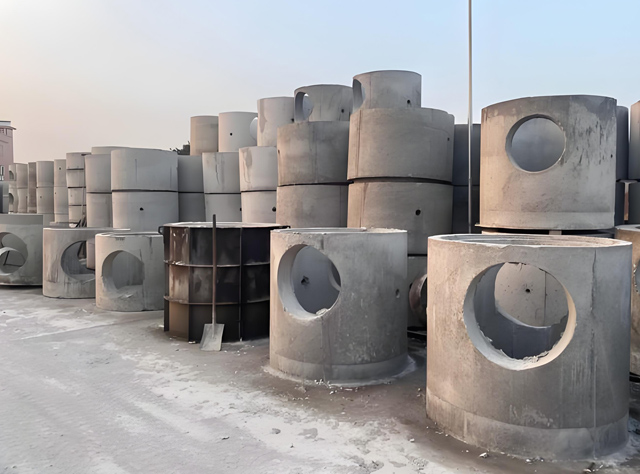
1. Comparison of Prefabricated and Traditional Manholes
Prefabricated manholes offer several advantages over traditional manholes, including:
Quick Installation and Short Construction Period:
Prefabricated manholes are manufactured in a factory, which makes on-site installation straightforward and significantly reduces the overall construction period.
Easier Quality Assurance:
Factory production is not influenced by on-site construction conditions, ensuring greater product stability and consistency.
High Structural Strength and Durability:
The manhole frame of prefabricated manholes is stronger, less prone to deformation, and offers a longer service life.
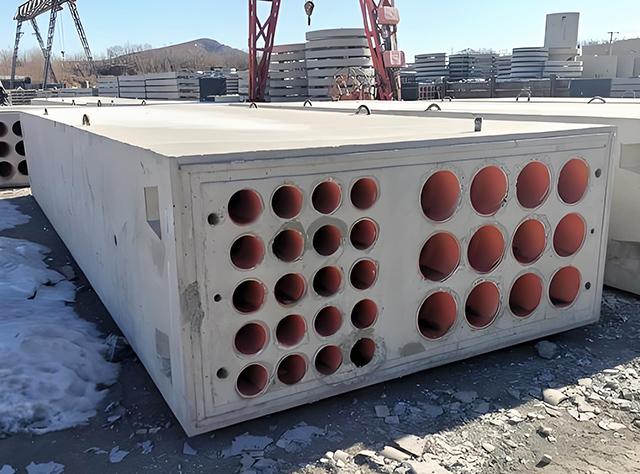
2. Key Raw Materials
The concrete strength grade of prefabricated manholes is C40, with a water permeability grade of P8. The materials used include:
Cement: PO 42.5 MPa cement.
Aggregate: River sand with a fineness modulus between 2.6 and 2.9, and continuous graded crushed stone with a particle size of 5–25 mm.
Reinforcement: HPB300 and HRB400 grade steel bars. The protective layer thickness for stress reinforcement must be no less than 25 mm.
Bolts: M16, grade 8.8.
Waterproofing Material: EPDM (Ethylene Propylene Diene Monomer) waterproof sheet/strip.
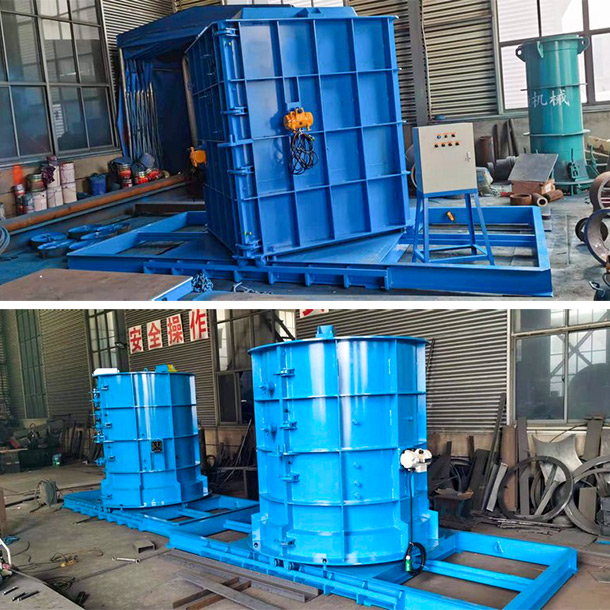
3. Important Production Considerations
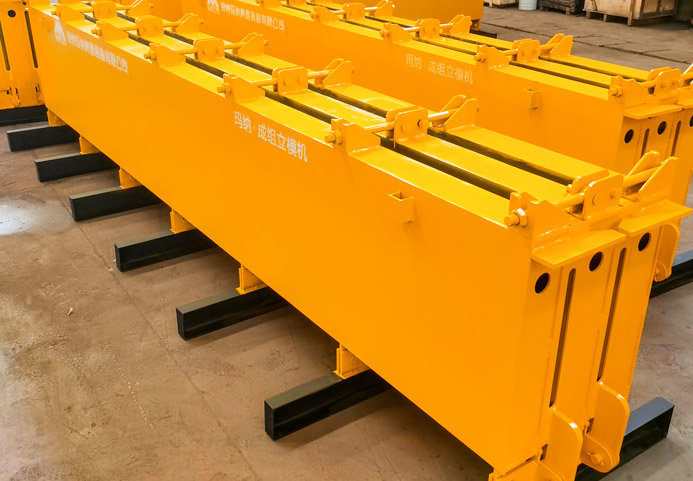
Mould manufacturers should fabricate moulds based on the design specifications, including provisions for reserved holes and embedded parts. The mould surface must be smooth, with tight seams, meeting technical standards. Before use, the mould dimensions should be calibrated, and a release agent should be applied after cleaning.
When binding steel bars, the diameter, spacing, and protective layer thickness of the reinforcement must comply with the design and standard requirements. The correctly tied steel bars should then be placed into the mould, and compensating parts for reserved holes and embedded parts should be arranged as required.
Concrete should be poured in layers, ensuring proper compaction to maintain pouring quality.
Once the component is poured, it should be promptly covered for curing, with steam curing applied if necessary. After the mould can be removed, the form should be taken off, and regular curing should continue. Once curing is complete, components such as ladders and waterproofing sheets (strips) should be installed.
4. Mould Processing and Maintenance
Mould processing must ensure dimensional accuracy, with the component's shape and flatness conforming to design specifications. Moulds should undergo regular maintenance during use to ensure long-term, stable operation.
5. Concrete Pouring Guidelines
Concrete for the same component should be poured continuously. Vibration rods should be used during pouring to ensure the concrete is properly compacted.