Welcome to Mana Precast

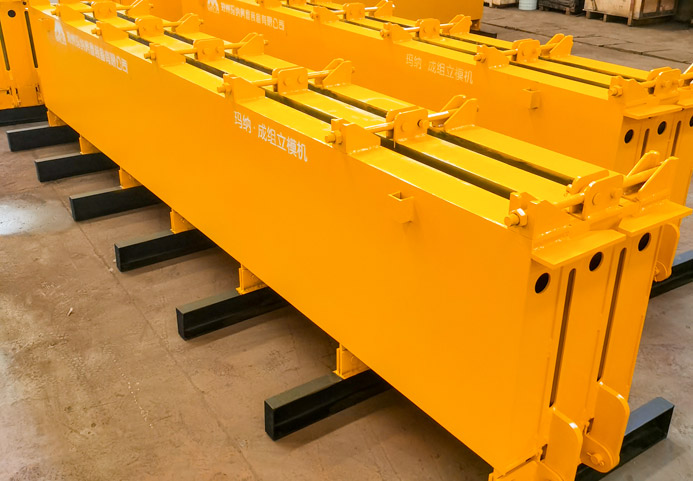


Precast Boundary Wall Mould
- Vertical Casting Design
- Rigid Steel Mould Structure
- Customisable Surface Textures
| Parameter | Value |
|---|---|
| Mould Type | Precast boundary wall mould |
| Components | Wall panels, posts and caps |
| Mould Material | Q355B |
| Designed Service Life | 2,000 cycles |
| Casting plate thickness | 6 mm |
| Dimensional Tolerance | ±1.0 mm / 1 m |
| Flatness Tolerance | ±1.5 mm over 3 m |
A typical precast concrete boundary wall system comprises five main components: precast foundation units, posts, wall panels, copings and pier caps. Its modular design allows for efficient on-site assembly and installation.

Why Choose Precast Boundary Walls?
Rapid Installation
All components are factory-produced and can be quickly assembled on site. Compared with conventional cast-in-situ construction, this can reduce construction time and improve labour productivity.
Durability and Low Maintenance
Precast concrete boundary walls offer strength and durability, with minimal maintenance requirements under normal service conditions.
Consistent Quality and Appearance
Factory production helps achieve consistent dimensions and surface finishes, reducing variability associated with on-site construction.
Reduced On-Site Waste
Modular construction can help reduce on-site material waste and water consumption, depending on the installation method and project requirements.

Key Highlights of Mana Boundary Wall Panel Moulds
Designed for Vertical Casting
Our boundary wall panel moulds are specifically designed for vertical casting, helping maintain consistent panel dimensions and surface quality across repeated production cycles.
Robust Steel Construction
Our moulds feature a rigid steel frame and accurately manufactured components to maintain structural stability during repeated casting cycles.
Customised Surface Finishes

Formliners are available to create a variety of concrete surface textures and patterns, allowing customised finishes to meet different architectural and aesthetic requirements.
High-Quality Fair-Faced Concrete Finish
A well-designed mould, effective sealing and appropriate concrete compaction help achieve a consistent fair-faced concrete finish with minimal additional surface treatment.

Guide to Boundary Wall Mould Operation
Preparation
Thoroughly clean the mould surfaces and apply an even coat of suitable mould release agent.
Mould Assembly
Ensure that all mould components are correctly positioned, securely assembled and properly sealed.
Concrete Placement
Place the concrete into the mould and use a suitable internal vibrator to remove entrapped air and achieve proper concrete compaction. Vibration should be controlled to avoid segregation and ensure uniform compaction throughout the panel.
Curing
Cure the concrete in accordance with the specified curing procedure until it reaches the required strength for demoulding.
Demoulding
Open the mould and carefully remove the finished concrete panel, following the specified demoulding procedure.