Welcome to Mana Precast
Mana's EPS Composite Wall Panel Production Line
The demand for lightweight wall panels continues to grow in the construction industry. Mana's EPS Cement Sandwich Panel Production Line is designed to manufacture lightweight composite wall panels using an integrated production process, covering raw material preparation, mixing, moulding, curing and panel handling.
The production line can be configured to meet different production capacities and manufacturing requirements.
Main Equipment
The EPS Cement Sandwich Panel Production Line consists of the following main equipment, arranged according to the production process:

1. EPS Pre-Expansion System
Expands EPS beads to the required density before they are mixed with other raw materials.
2. Concrete Mixing Station
Mixes cement, expanded perlite, EPS beads, additives and other specified materials to produce the panel core mixture. Different mixer models are available to suit production requirements.
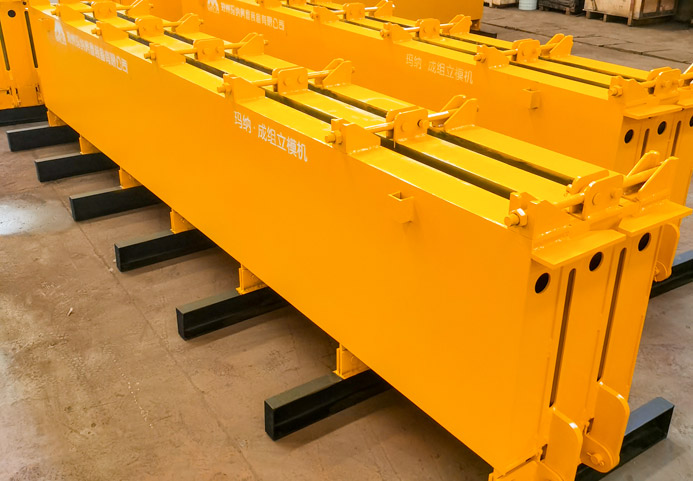
3. Mould System
Provides the moulding space for forming EPS cement sandwich panels to the specified dimensions and thicknesses.
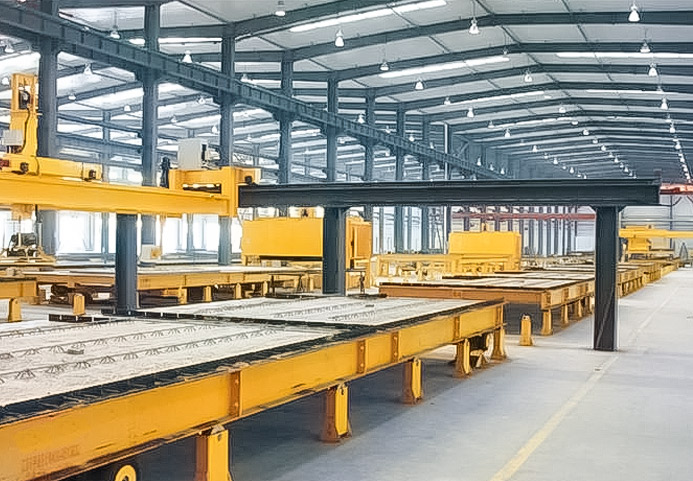
4. Mould Circulation System
Transfers moulds between different production stages to support continuous production.
5. Steam Boiler
Supplies steam for the panel curing process.
6. Automatic Panel Unloading Machine
Removes cured panels from the moulds for subsequent handling and storage.
7. Control and Pneumatic Systems
Provide the control and pneumatic functions required for the production line.
Production Line Configurations and Capacity
Mana offers different production line configurations to accommodate various manufacturing requirements.
| Item | Available Configuration |
|---|---|
| Storage Hopper | 2 × 80 m3 / 2 × 100 m3 / 2 × 120 m3 |
| Mixer Models | JS1200 / JS1500 / JS2000 / JS3000 |
| Number of Mould Cars | 5 / 10 / 15 / 25 |
| Designed Annual Production Capacity | 100,000–500,000 m2 |
The designed annual production capacity depends on the selected equipment configuration, panel dimensions, production scheduling, curing time and operating conditions.
Panel Specifications
| Parameter | Specification |
|---|---|
| Thickness | 60–200 mm |
| Standard Width | 610 mm |
| Length | 2,440–3,000 mm |

Other panel dimensions can be accommodated subject to the production line configuration and mould design.
Key Production Features
Automated Material Handling
Integrated material handling equipment supports the transfer and feeding of raw materials throughout the production process.
Consistent Mixing
The mixing system combines the specified raw materials to produce a uniform core mixture for panel moulding.
Controlled Panel Moulding
The mould system forms panels according to the specified dimensions and thicknesses.
Integrated Production Process
The production line connects material preparation, mixing, moulding, curing and panel handling into an integrated manufacturing process.
EPS Cement Sandwich Panel Structure and Features
EPS cement sandwich panels, also known as EPS composite wall panels, consist of non-asbestos calcium silicate facing boards and a lightweight core made from expanded perlite, EPS beads, lightweight Portland cement and additives.

The facing boards form the outer surfaces of the panels, while the lightweight core forms the main body of the composite panel.
Key Panel Features
Lightweight Panel Construction
The lightweight core reduces panel self-weight compared with conventional solid concrete wall construction. The actual weight depends on panel thickness and material composition.
Tongue-and-Groove Joints
Tongue-and-groove edge profiles help align adjacent panels and facilitate joint installation.
Flexible Panel Dimensions
Panels are available in different thicknesses and lengths to suit various partition wall requirements, subject to the production line and mould configuration.
Adaptable Installation
The panels are suitable for internal non-loadbearing partition walls in residential, commercial and industrial buildings, subject to project design and local building requirements.
Fire performance, thermal performance and airborne sound insulation should be established through appropriate testing of the complete panel system. These properties should not be assumed from the raw materials alone.
Applications and Installation Considerations
EPS cement sandwich panels are primarily used for internal non-loadbearing partition walls in residential, commercial and industrial buildings.
For proper handling and installation, the following points should be considered:
-
Transportation: Panels should be properly secured during transport and protected against impact and damage.
-
Storage: Store panels on a flat, adequately supported surface in a dry area. Follow the manufacturer's instructions for stacking height and support arrangements.
-
Cutting and Installation: Use suitable tools and follow the panel manufacturer's installation instructions when cutting, positioning and fixing panels.
-
Service Installations: Electrical conduits and plumbing services should be installed in accordance with the panel system supplier's recommendations. Avoid excessive cutting or chasing that could affect panel integrity.
-
Jointing and Fixing: Use the specified jointing materials and fixing methods. Do not apply loads to newly installed panels until the relevant jointing materials and fixings have reached the required strength, as specified by the system supplier.
Mana EPS Cement Sandwich Panel Production Line
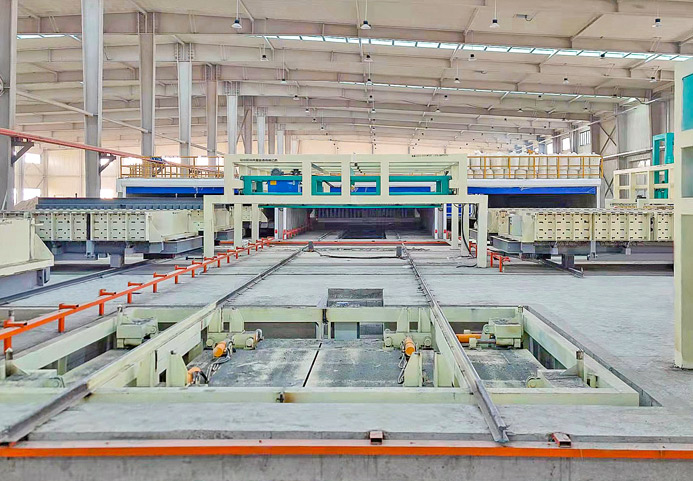
Mana's EPS Cement Sandwich Panel Production Line integrates the main processes required for panel manufacturing, from raw material preparation and mixing to moulding, curing and panel handling.
With different equipment and mould configurations available, the production line can be tailored to suit the required panel specifications, production capacity and factory layout.