Welcome to Mana Precast
High-Precision Moulds for Prefabricated Retaining Walls
To ensure the safety of river channels, mountain slopes, and their surroundings, it's necessary to implement certain measures for supporting, reinforcing, and protecting slopes. Retaining walls are structures used extensively in industrial and civil construction, highways, railways, municipal, and hydraulic engineering to stabilize and reinforce soil and hillside masses.
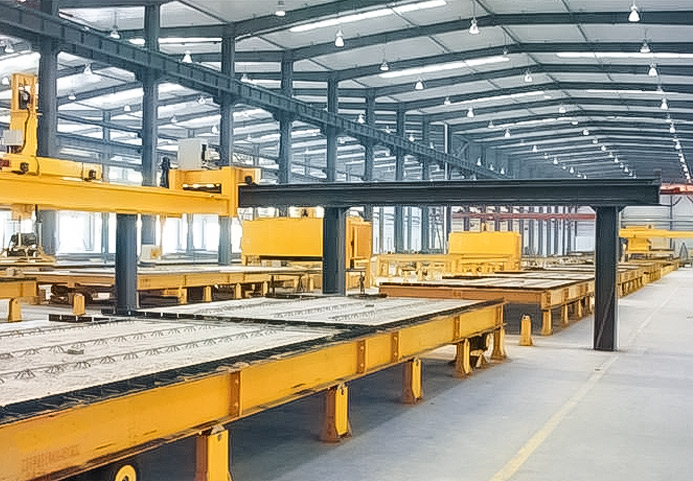
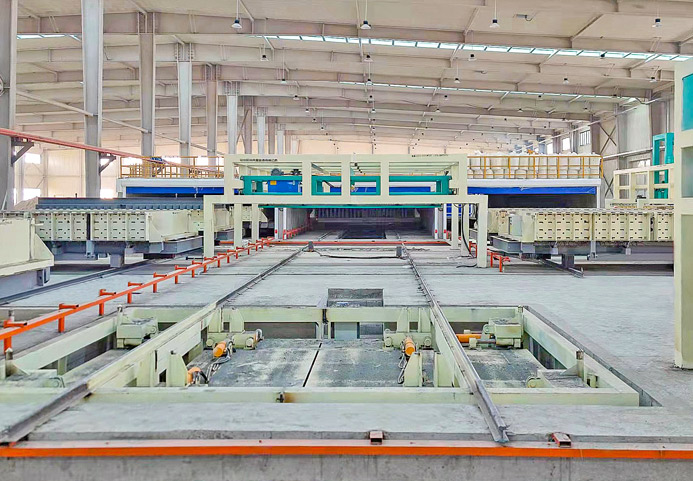
With the advancement of prefabricated technology, reinforced concrete retaining walls have shifted from cast-in-place to prefabricated forms. Prefabricated retaining walls offer significant advantages such as shortened construction periods and improved efficiency, making them widely used in highway expansion and construction projects.
Advantages of Prefabricated Concrete Retaining Walls
1. Efficiency in Construction: Mechanized construction processes are fast, simple, and labor-saving, effectively shortening project durations and enhancing safety.
2. Quality Assurance: Prefabricated walls require preliminary site data analysis, enhancing the quality of road engineering surveys. Manufacturing in factories ensures high production quality, promoting the prefabrication and modular development of major construction projects in China. This approach effectively avoids the drawbacks of multiple processes and slow construction progress associated with cast-in-place retaining walls.
Features of Prefabricated Retaining Wall Moulds
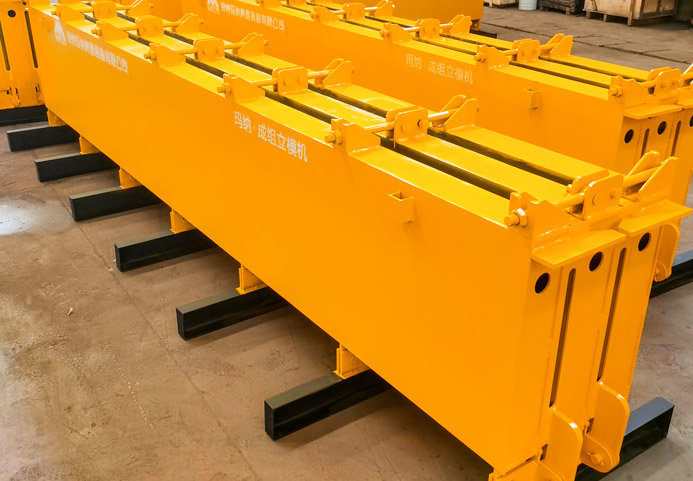
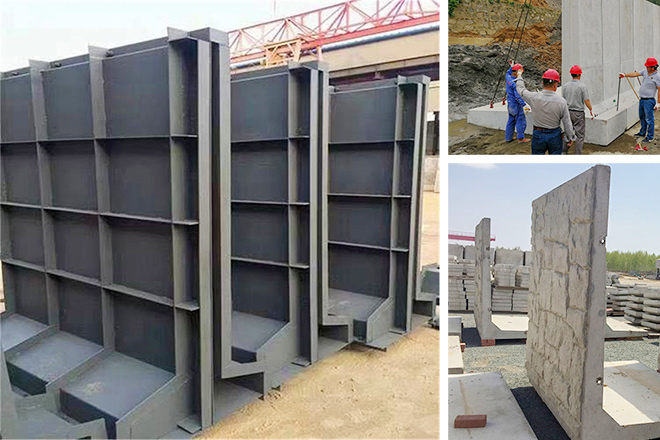
1. The mould includes base, side, end moulds, support devices, and fastening mechanisms, with optional hydraulic closure, vibration, and curing modules based on specific needs.
2. Diverse product specifications (e.g., U-shape, L-shape, wave-shape) meet various requirements.
Operation Instructions
1. Apply mould release agent on the inner surface of the mould, use vibration rods during concrete pouring to eliminate air bubbles, ensuring smooth and aesthetically pleasing concrete products post-demoulding.
2. Clean the mould promptly after use, rinse with water to remove residue, wipe dry with a clean cloth, and apply rust inhibitor to prevent corrosion.
Key Features
1. High strength, good rigidity, and excellent stability, with high precision in repetitive installations, significantly increasing mould turnover.
2. Easy assembly and disassembly, precise positioning, and convenient maintenance.
3. Corrosion resistance and strong acid-alkali resistance, suitable for large-scale factory production and steam curing environments.
4. Accurate dimensions, high surface smoothness, meeting the requirements for decorative and plain concrete applications.
5. External reinforcement plates enhance overall structural integrity, with a typical lifespan of approximately 5-8 years.