Welcome to Mana Precast
What is prefabrication technology in construction?
1. Introduction to Prefabricated Construction Technology
Prefabricated construction is a modern building method that involves manufacturing structural components in a controlled factory environment, followed by transportation and on-site assembly. Unlike traditional construction methods, this approach allows for simultaneous production of multiple components, reducing material waste, improving efficiency, and lowering overall costs.

The system consists of two main stages:
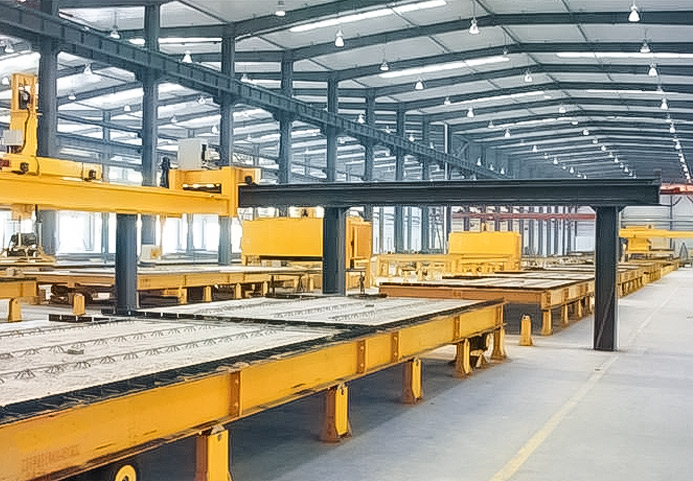
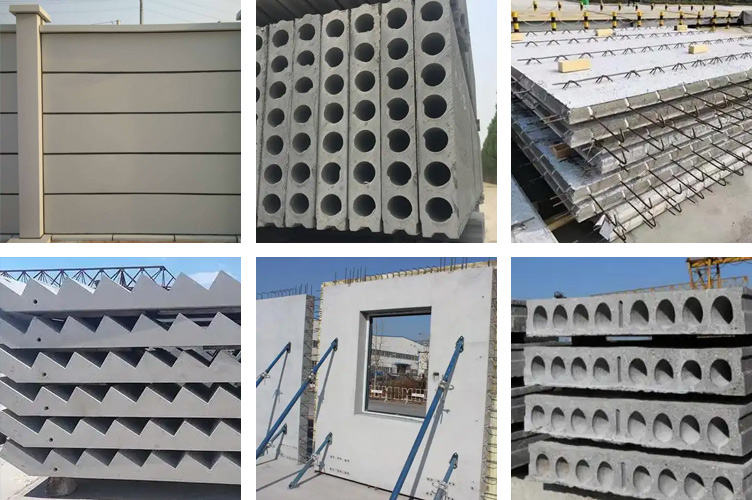
Prefabrication: Components such as external and internal wall panels, composite floor slabs, balconies, and staircases are manufactured in a factory setting.
Assembly: These precast components are then transported and installed at the construction site to complete the structure.
2. Production Process and Mould Design
2.1 Rebar Processing
Reinforcement must be processed according to design specifications. This includes cutting, bending, and welding to ensure accuracy in the type, size, quantity, and positioning of steel bars.
2.2 Formwork Design and Installation
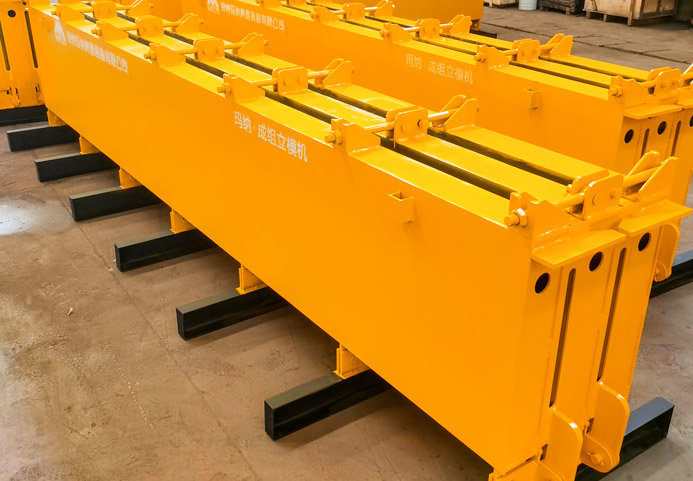
Formwork should be custom-designed based on the shape, dimensions, and precision requirements of each component. It must have sufficient strength, rigidity, and stability, while also allowing easy demoulding after casting.
2.3 Concrete Pouring and Vibration
During concrete casting, key parameters such as pouring speed, layer height, and vibration duration must be controlled to avoid issues like segregation or surface defects. A combination of mechanical and manual vibration ensures proper compaction and surface quality.
2.4 Curing Process
Curing is critical to achieving the desired strength and durability of the precast elements. Two methods are commonly used:
Natural Curing: Requires the surface to be kept moist for at least 7 days.
Steam Curing: Accelerates the hardening process and enhances production efficiency. However, curing temperature and humidity must be well controlled to avoid cracking due to rapid temperature rise or excessive moisture.
3. Transportation and Storage of Precast Components
3.1 Transportation Requirements and Protective Measures
Proper transportation methods are essential to avoid damage:
Use suitable transport vehicles based on component size and weight.
For large wall panels, dedicated carriers with flexible securing devices should be used to prevent impact and cracking during transit.
Beams and columns should be supported on timber blocks placed at correct stress points to distribute the load evenly and prevent deformation.
Surfaces should be protected with plastic wrap, blankets, or other coverings to prevent scratches and contamination.
3.2 Storage Site and Methods
Precast components must be stored in a well-prepared area:
The ground should be flat, firm, and well-drained to avoid water accumulation or settlement.
Components should be categorised by type, size, and installation order for easy identification and handling.
Wall panels are best stored vertically using specialised racks.
Beams and columns should be stored horizontally on uniform timber spacers to keep them level.
Regular inspections should be conducted, and any issues should be addressed promptly.