Welcome to Mana Precast
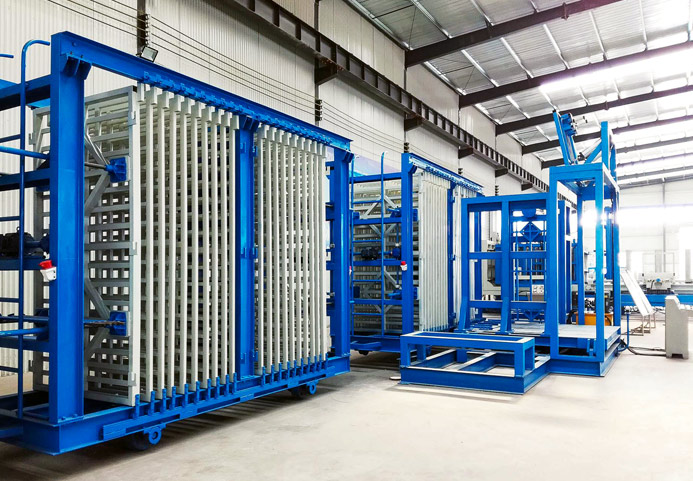
Eps Cement Sandwich Panel Production Line
- High production efficiency
- Stable operation
- Safety and reliability
| Parameter | Value |
|---|---|
| Annual Capacity | 100,000–500,000 m² |
| Maximum Wall Panel Size (L×W×T) | 2440 × 610 × 200 mm |
| Total Production Line Length | 50–200 m (depending on configuration) |
| Curing Method | Natural curing |
| Automation Level | Semi-automatic / Fully automatic |
| Dimensional Tolerance | ±1 mm/m |
| Technical Support | Global on-site or remote guidance |
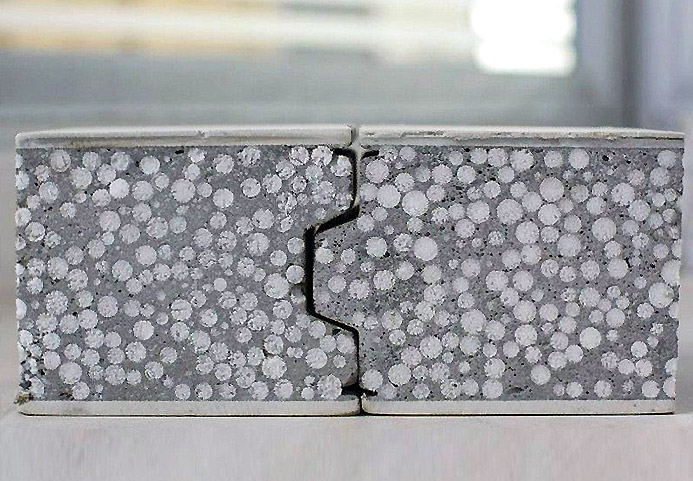
Lightweight EPS Sandwich Wall Panels are a new type of high-quality, lightweight composite wall system. They consist of fibre-reinforced calcium silicate boards as face sheets, with a core composed of flame-retardant expanded polystyrene (EPS) particles, cement, a small proportion of fly ash, and admixtures. These composite wall panels are used as non-load-bearing partition elements in buildings and offer distinct advantages in terms of manufacture, installation, in-service performance, energy efficiency, and environmental sustainability.
Mana EPS Wall Panel Line Features
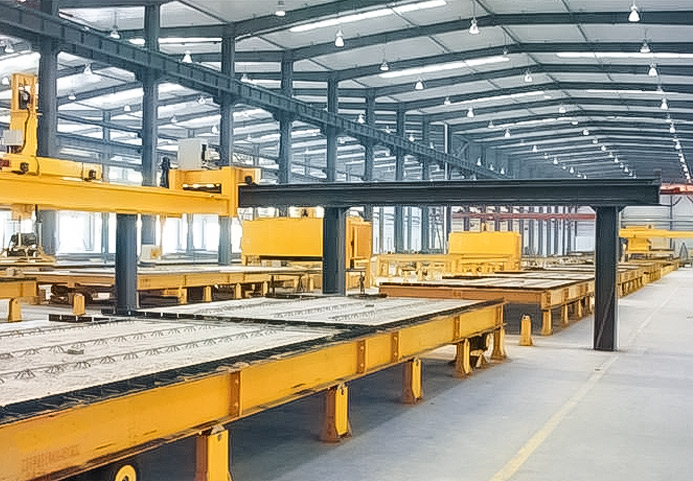
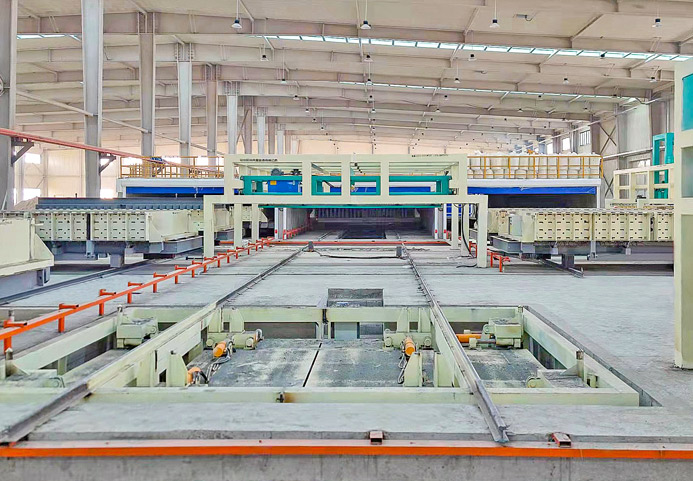
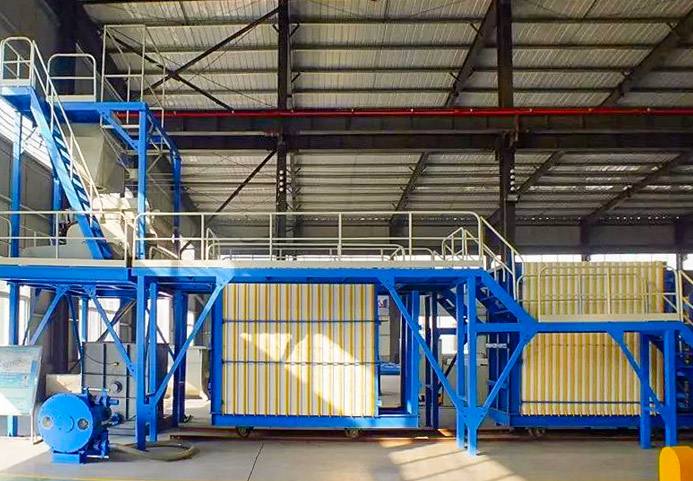
The mixing and casting systems of this composite wall panel production line are stationary, while the moulds are mobile. Each mould is capable of producing 40 panels per cycle. The production line incorporates multiple proprietary technologies and enables automated manufacture of composite sandwich wall panels. Our company can provide customers with a complete set of wall panel production process services and can also deliver turnkey solutions.
Capacity
MN-10: 100,000 m² per annum
MN-20: 200,000 m² per annum
MN-50: 500,000 m² per annum
Main Equipment
Bulk Storage System: Designed for the containment of cement and pulverised fuel ash (PFA). Individual silo capacity is typically 80 tonnes, scalable to the specific requirements of the production plant.
Batching and Metering System: Comprises screw conveyors for cementitious materials and bucket elevators for fine aggregates and additives. Cement, ash, water, and chemical admixtures are gravimetrically weighed, while polystyrene beads are volumetrically metered to ensure precise dosing and consistency.
Mixing Plant: Engineered for homogenous blending; features a compact footprint and stable operational performance to maximise cycle efficiency.
Casting System: Utilises a high-pressure pump for continuous slurry discharge, ensuring high-density units with minimal void formation or surface porosity.
Mould Circulation System: The moulds circulate along a track, ensuring safe, reliable operation and ease of handling.
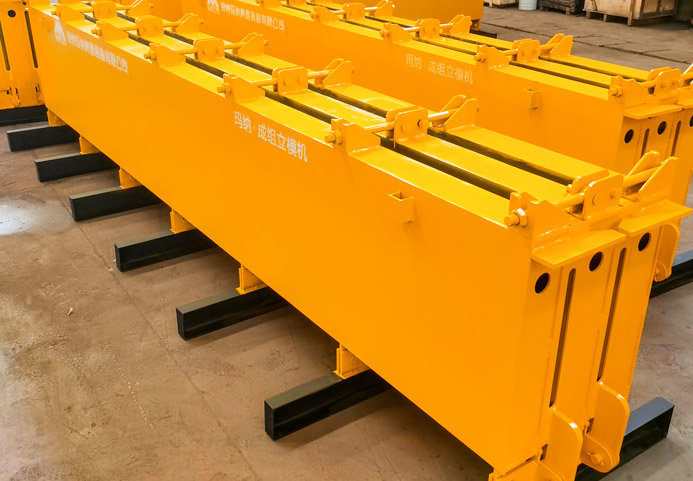
Precision Moulds: Manufactured to strict dimensional tolerances with robust sealing to prevent leakage.
Panel Output System: Ensures efficient panel handling, reducing labour requirements and saving time.
Production Process
Batching and Mixing: Automated weighing and mixing of raw materials;
Mould Assembly: Sequential loading of fibre-reinforced calcium silicate boards into the internal divider grids, followed by the lateral compression of side shutters and spacer plates; the entire multi-cavity assembly is then secured using heavy-duty bolts and nuts to ensure a rigid, leak-proof set-up.
Casting and Consolidation: Transfer to the pouring station for concreting, followed by vibration-assisted compaction and surface finishing;
Curing and Stripping: Post-curing demoulding and extraction of the precast composite sandwich panels;
Mould Cleaning and Application of Release Agent.