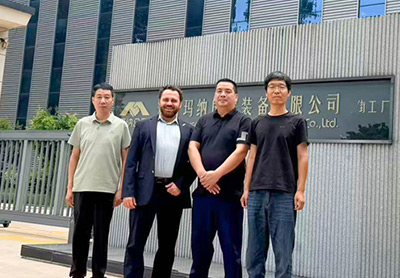
Welcome to Mana Precast


Precast Concrete Wall Panel Machine
- Low investment, quick returns
- Stable process, high precision
- Wide application range
| Parameter | Value |
|---|---|
| Annual Capacity | 30,000–120,000 m² |
| Panel Size (L×W×T) | 3,000 × 600 × (90–200) mm |
| Automation Level | Manual |
| Number of Cells | 8-12 (customisable) |
| Dimensional Tolerance | ±1 mm/m |
| Flatness Tolerance | ±1.5 mm over 3 m |
| Technical Support | Global on-site or remote guidance |
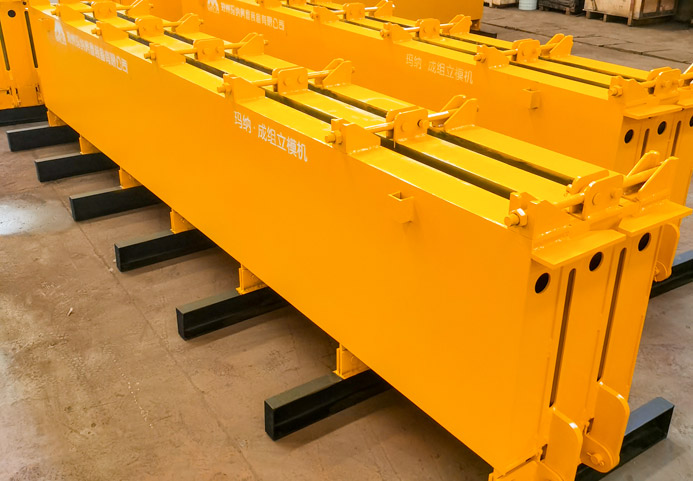
Mana's lightweight wall panel machine is designed for the production of various types of lightweight wall panels using locally sourced raw materials. It features accurate moulding, stable operation and flexible production configurations.
Wall Panel Machine Features
Simple Operation: Designed for straightforward operation and reliable performance.
Hydraulic Clamping and Demoulding: A fully hydraulic system handles mould clamping and demoulding.
Vertical Moulding and Vibration Casting: The vertical moulding process combined with vibration-assisted casting helps achieve good panel flatness and dimensional accuracy.
Rigid Mould Structure: High structural rigidity supports accurate forming, consistent panel thickness and flat surfaces.
Plastic Core Tubes: Plastic core tubes are used to form hollow sections, with automatic core extraction available as an option.
Automatic Temperature Control: Electric or steam heating with automatic temperature control supports consistent curing and can shorten demoulding cycles.
Adjustable Panel Dimensions: Two-stage thickness adjustment allows the machine to produce panels with thicknesses of 60, 90, 120, 150 and 180 mm. Panel length is also adjustable.
Advantages of Lightweight GRC Wall Panels
Lightweight GRC wall panels are made from a cement-based matrix reinforced with alkali-resistant (AR) glass fibres. The glass fibres improve the material's toughness and enhance its tensile, flexural and impact performance.

Mechanical Performance: Glass fibre reinforcement improves toughness and flexural performance, helping panels withstand handling and service loads.
Fire Performance: GRC panels have a cement-based composition and can provide good fire performance. The fire classification and fire resistance of the finished wall system must be verified through testing.
Material Composition: The panels are primarily made from cement-based materials and alkali-resistant glass fibres. Their environmental performance depends on the raw materials, manufacturing process and service life.
Moisture Resistance: The cement-based composition provides resistance to moisture. Suitability for wet areas depends on panel properties, joint detailing and the specified waterproofing system.
Sound Insulation: Panel mass, thickness and wall construction contribute to sound insulation. Actual performance depends on panel design, joints and installation.
Easy and Quick Installation: Panels can be sawn, drilled and cut to size. Their installation can reduce wet work, construction time and material waste.