Welcome to Mana Precast


Noise Barrier Wall Mould
- Vertical Battery Mould System
- Automated Core Insertion and Extraction
- Integrated Forming of Acoustic Openings and Recesses
A noise barrier is an acoustic structure installed between a noise source and a receiver to reduce the transmission of unwanted sound. Noise barriers are commonly used alongside highways and railways, as well as in other noise-sensitive areas. Depending on their design and acoustic properties, they can provide sound insulation, sound absorption, or a combination of both.
The basic principle is to interrupt the direct path of airborne sound between the source and the receiver, reducing noise levels in the protected area.
Advantages of Precast Noise Barriers
Durability and Structural Stability: Concrete offers high compressive strength and good structural stability, making it suitable for noise barriers exposed to outdoor conditions and long-term service loads.
Long Service Life and Low Maintenance: Properly designed, manufactured and installed precast concrete barriers can provide a long service life with relatively low routine maintenance requirements.
Environmental Performance: Concrete noise barriers offer long-term durability. Their overall environmental impact depends on factors such as mix design, raw materials, manufacturing processes, transportation and service life.
Sound Insulation Performance: The mass and density of concrete help reduce airborne sound transmission, making precast concrete suitable for noise barrier applications where sound insulation is required.
Resistance to Environmental Exposure: With an appropriate concrete mix design and adequate detailing, precast concrete barriers can provide good resistance to weathering and environmental exposure conditions, including freeze-thaw cycles where applicable.
Mana's Concrete Noise Barrier Wall Moulds
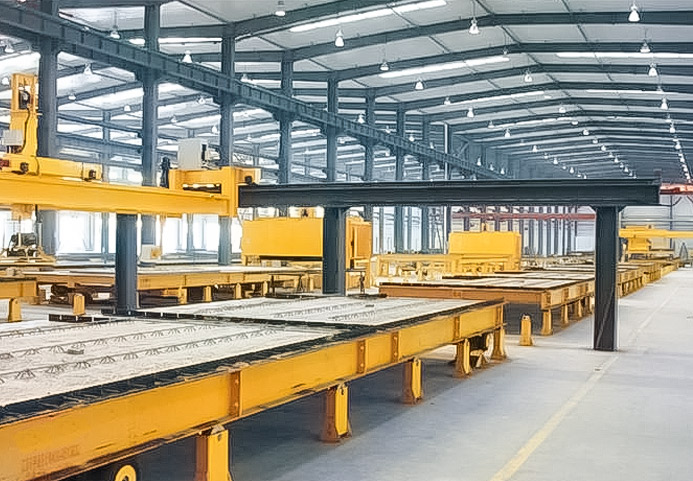
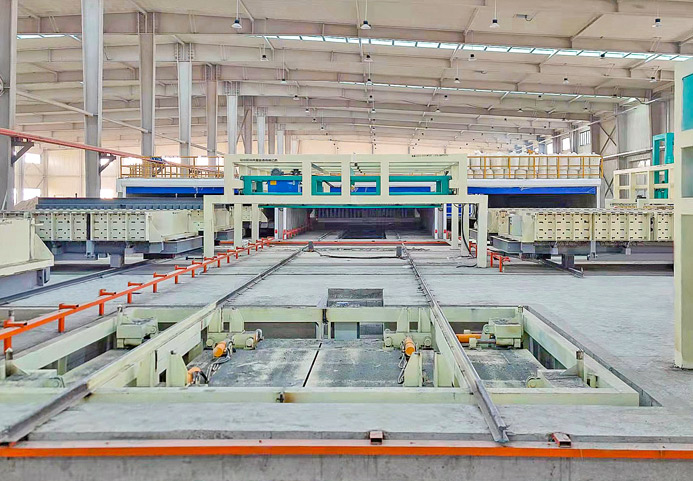
Mana's noise barrier moulds are designed for the efficient production of precast concrete noise barrier elements, with a focus on production efficiency, dimensional accuracy and consistent concrete quality.
Key features include:
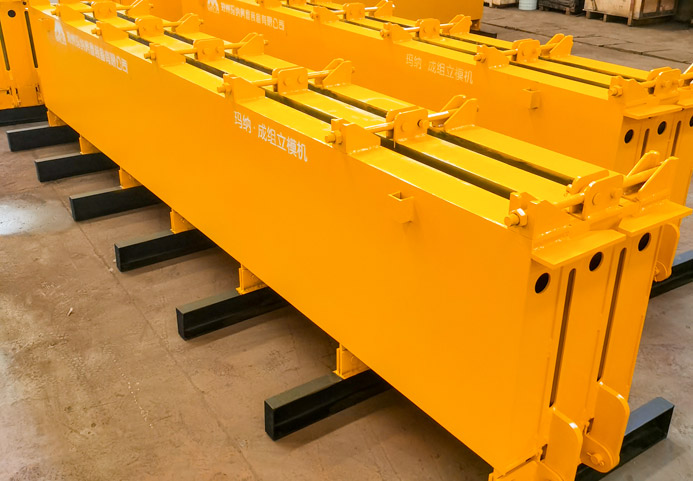
Vertical Battery Mould: The vertical battery mould system allows multiple noise barrier elements to be cast simultaneously, increasing production output while making efficient use of the available factory floor space.
High Rigidity: The rigid mould structure is designed to withstand the loads generated during concrete casting and compaction while maintaining dimensional stability and the specified geometry of the precast elements.
One-Step Forming: The mould design allows acoustic openings, recesses and other specified geometric features to be formed directly during casting, minimising the need for secondary processing.
Automatic Core Insertion and Extraction: A dedicated core extraction machine, operated through a control cabinet, handles the insertion and extraction of cores used to form hollow sections in noise barrier panels. This reduces manual handling and simplifies the moulding process.
Hydraulic System for Precision: Hydraulic opening and closing mechanisms provide controlled mould operation and positioning, helping maintain consistent dimensions across production cycles.
Specialised Sealing and Vibration Systems: Specialised sealing arrangements help minimise grout leakage, while the vibration system promotes concrete compaction and helps achieve consistent concrete density and surface quality.