Welcome to Mana Precast


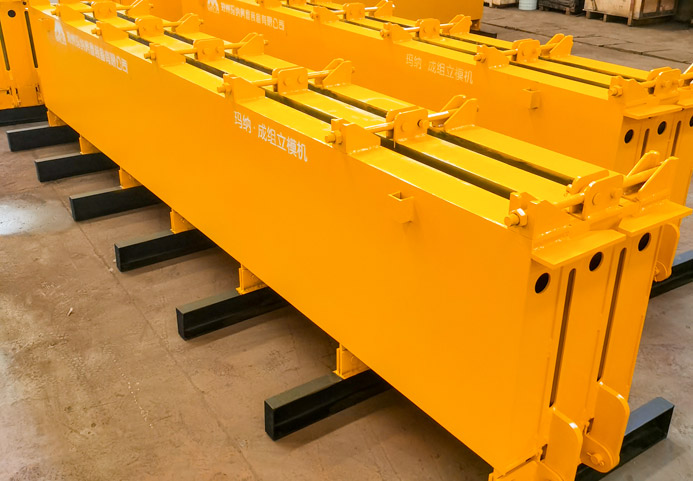
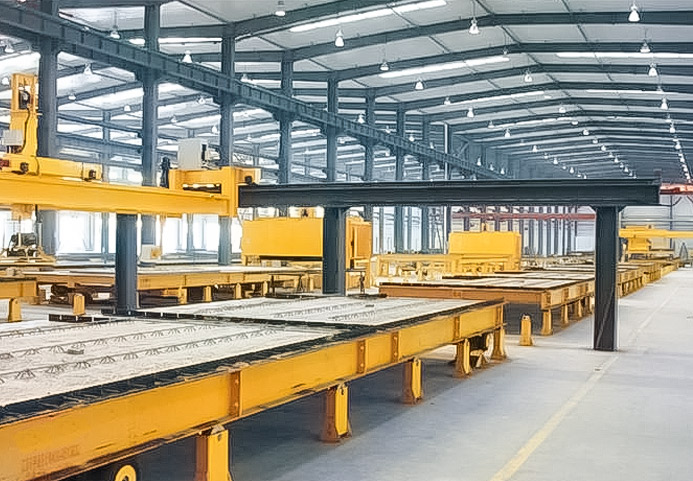
Precast Double Tee Slab Mould
- Rigid Steel Mould Structure
- Long Mould Service Life
- Adjustable Mould Configurations
- Precision Mould Manufacturing
| Parameter | Value |
|---|---|
| Mould Type | Double-T slab mould |
| Mould Material | S355 equivalent |
| Designed Service Life | 2000 cycles |
| Casting Plate Thickness | 5 mm |
| Locking Type | Wedge Pin |
| Dimensional Tolerance | ±1.0 mm / m |
| Flatness Tolerance | ±1.5 mm over 3 m |
A prestressed double tee slab is a precast concrete element consisting of a wide top flange supported by two longitudinal webs. Its design provides an efficient structural solution for floor and roof applications, particularly where long spans are required.
Features of Prestressed Double Tee Slabs
Material Efficiency: Efficient use of concrete and prestressing steel helps achieve a favourable balance between self-weight and load-bearing capacity.
Durability and Fire Performance: Durability depends on the concrete specification and exposure conditions, while fire resistance is determined by the structural design and specified fire performance requirements.
Long-Span Capability: Suitable for long-span applications, potentially reducing the need for intermediate supports.
Advantages of Mana Double Tee Slab Moulds
Mana manufactures double tee slab moulds customised to meet different project requirements. We provide worldwide customer support, including project consultation and mould drawing optimisation.
Precision Manufacturing: Components are manufactured to meet specified dimensional tolerances.
Robust Steel Construction: Designed for repeated use, with structural rigidity to maintain dimensional stability during production.
Adjustable Configurations: Depending on the mould design, configurations can be adjusted to accommodate different slab widths, web depths and lengths.
How to Use Precast Double Tee Moulds
Prepare the Mould: Clean the mould surfaces and check that all components are correctly positioned and securely fixed.
Install and Stress the Prestressing Strands: Install the prestressing strands on the casting bed and apply the specified prestressing force in accordance with the approved production procedure.
Place Concrete: Place the specified concrete mix into the mould in accordance with the production procedure.
Compact the Concrete: Apply the specified vibration method to achieve proper concrete compaction and minimise entrapped air.
Cure the Concrete and Release Prestress: Follow the specified curing procedure until the concrete reaches the required transfer strength. Release the prestressing strands gradually and in a controlled sequence to transfer the prestressing force to the concrete, in accordance with the approved production procedure. Demould and lift the element only when it has sufficient strength to withstand the stresses associated with handling and lifting.
Precautions
Inspect the mould regularly for wear, damage and loose components.
Clean the mould after each use to prevent hardened concrete build-up.
Follow the specified operating procedures and equipment load limits.
Protect exposed steel surfaces against corrosion during storage.
Handle and transport the mould carefully to prevent deformation or damage.
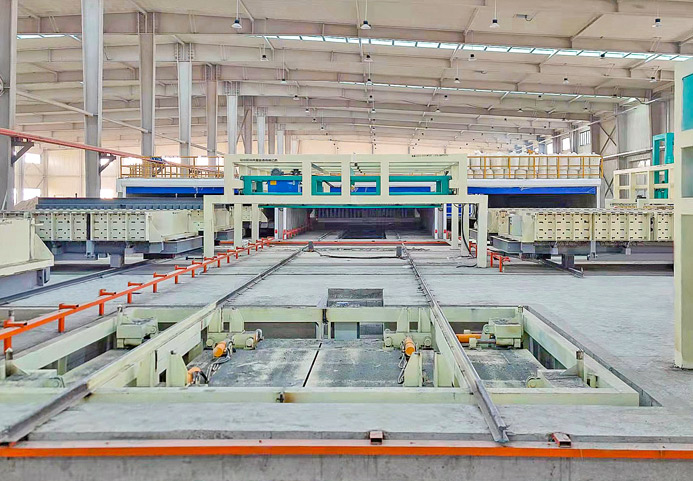
Supporting Equipment for Double Tee Slab Production
Concrete batching system
Concrete mixing system
Concrete distribution system
Concrete vibration system
Prestressing and anchoring equipment
Concrete curing system
Lifting equipment