Welcome to Mana Precast


High-precision Precast Concrete Segment Mould
- High Dimensional Accuracy
- Rigid Steel Mould Structure
- External Vibration System
- Customised Mould Design
| Item | Tolerance (mm) | Inspection Frequency |
|---|---|---|
| Width | ±0.35 | ≥14 points per set |
| Arc Length | ±0.40 | 4 lines per set |
| Chord Length | ±0.40 | 4 lines per set |
| Inner Cavity Height | +1.50 / -0 | ≥14 points per set |
In recent years, the expansion of metro and tunnel construction has increased demand for precast concrete segment production. At the same time, the development of larger and taller precast concrete wind turbine towers has placed greater demands on dimensional accuracy and structural quality.
Product Overview
Our segment moulds are designed with an external vibration system and can be used in both stationary production setups and automated production lines.
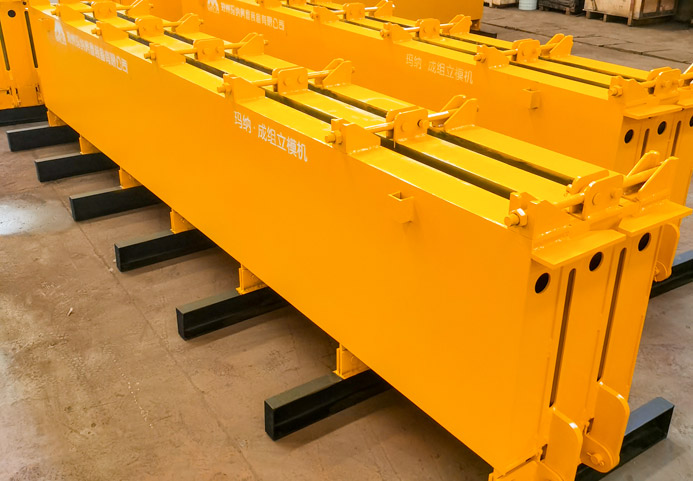
The mould structure is designed for high-cycle production, providing the rigidity, durability and dimensional stability required for demanding precast production environments.
Key Advantages
High Dimensional Accuracy
Precision-manufactured components are designed to meet specified dimensional tolerances, helping maintain consistency across production cycles.
Consistent Surface Finish
The mould contact surfaces are precision-machined to achieve the specified surface finish, helping maintain consistent concrete surface quality.
Robust Structural Design
The mould structure incorporates welded steel components designed to provide structural rigidity and maintain dimensional stability under production loads.
Efficient Vibration System
The external vibration system provides effective concrete compaction, helping improve concrete density and the overall quality of the finished segments.
Effective Sealing
Integrated sealing details help minimise grout leakage during casting, contributing to clean and well-defined concrete edges.
Designed for Repeated Production
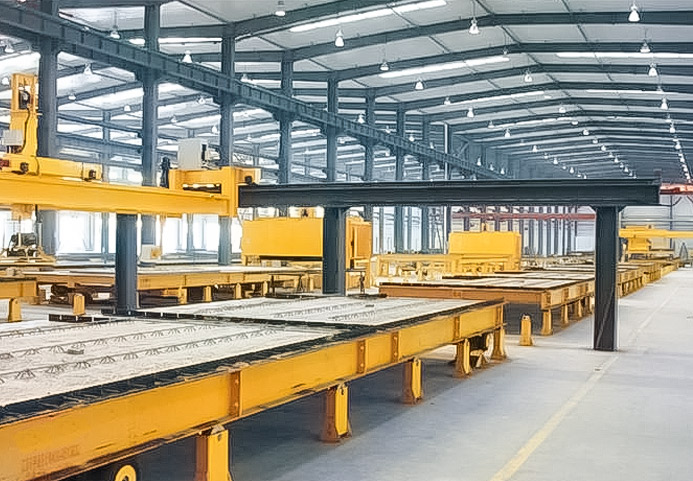
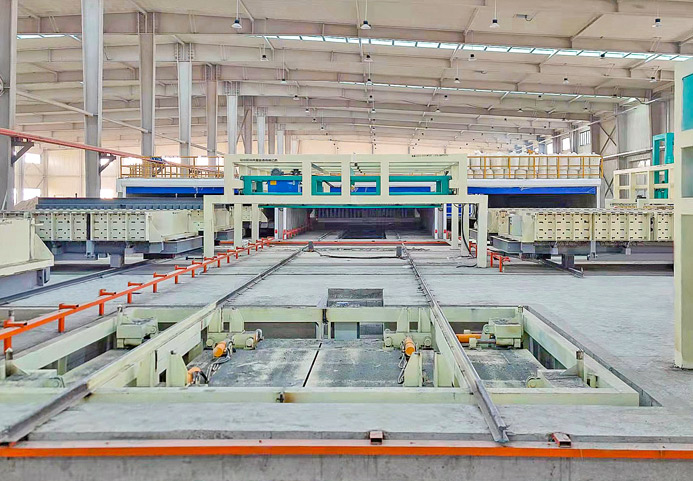
The moulds are designed for repeated use in stationary setups and automated production lines, supporting consistent production quality and efficient operation.
Production Process
The typical segment production process includes:
Mould cleaning → Mould assembly → Release agent application → Reinforcement cage placement → Installation of embedded parts → Mould closing → Concrete pouring → Surface finishing → Covering with plastic film → Steam curing → Demoulding
The actual production sequence and curing regime should be determined according to the segment design, concrete mix and project requirements. Steam curing can be incorporated as an optional part of the production process.
Operation Recommendations
Clean the mould thoroughly before use, paying particular attention to corners and grooves.
Apply mould release agent evenly to minimise the risk of surface defects.
Tighten bolts in the specified sequence to ensure proper assembly and dimensional stability.
Supporting Equipment
Typical supporting equipment may include:
Reinforcement cage assembly fixtures
Segment turning machines
Vacuum lifting systems (optional)
Customised configurations are available to suit specific production requirements and desired levels of automation.