Welcome to Mana Precast
Moulds for 3D PPVC and Fully Finished Prefabricated Volumetric Elements
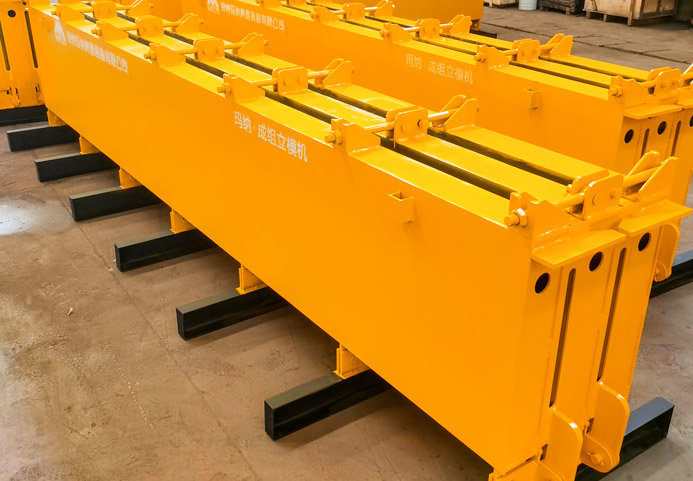
Cement house moulds, evolved from traditional large steel templates, represent an innovative solution for forming precast concrete structures. They play a crucial role in the production of prefabricated concrete houses, ensuring high efficiency and precision in modern construction.
What Are Cement House Moulds?
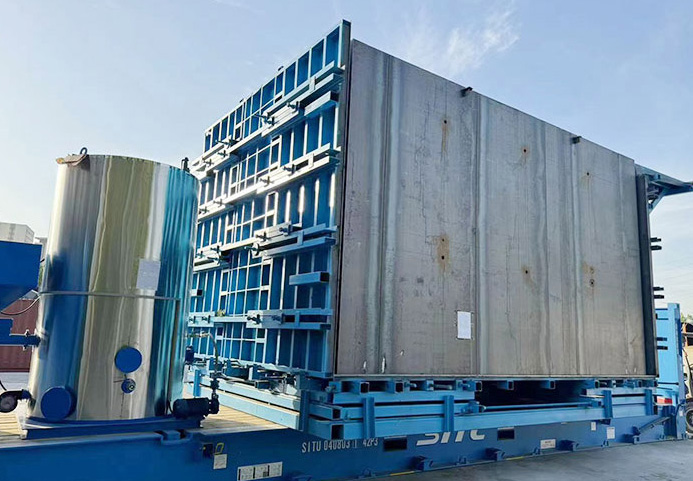
Cement house moulds are primarily made of steel and consist of several main components:
Inner mould core: Forms the internal cavity.
Outer mould walls: Shapes the external surfaces.
Base and sliding rails: Aid in mould assembly and operation.
Key Features:
Purpose: Precasting complete concrete houses.
Durability: Permanent moulds with a lifespan of 7–8 years.
Efficiency: Factory-based production reduces on-site costs and construction time.
The Evolution of Cement House Moulds
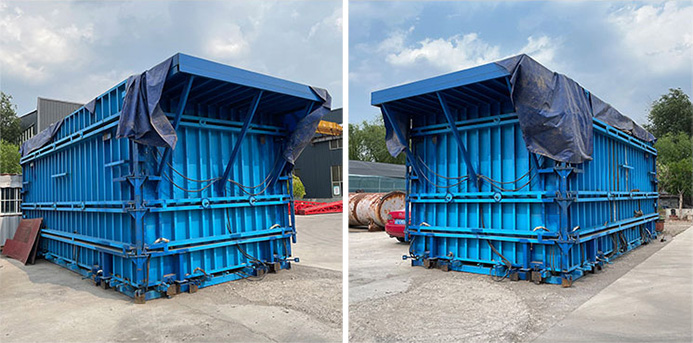
The development of cement house moulds has progressed through four generations, each improving on the previous design:
First-generation moulds (traditional cement house moulds):
Simple structure with lower costs.
Reliable but produces walls that taper, with a thickness difference of up to 3 cm.
Second-generation moulds (vertical inner mould outward-opening):
Uniform wall thickness with vertical design.
Inner mould retracts easily, ensuring simple demoulding.
Third-generation moulds (vertically adjustable):
Adjustable width and length.
Flexible moulds accommodate various dimensions.
Fourth-generation moulds (fully automated vertical hydraulic):
Fully automated operation with hydraulic systems.
No manual intervention, ensuring safety and efficiency.
Equipped with electric vibration for optimal concrete compaction.
How Do Cement House Moulds Work?
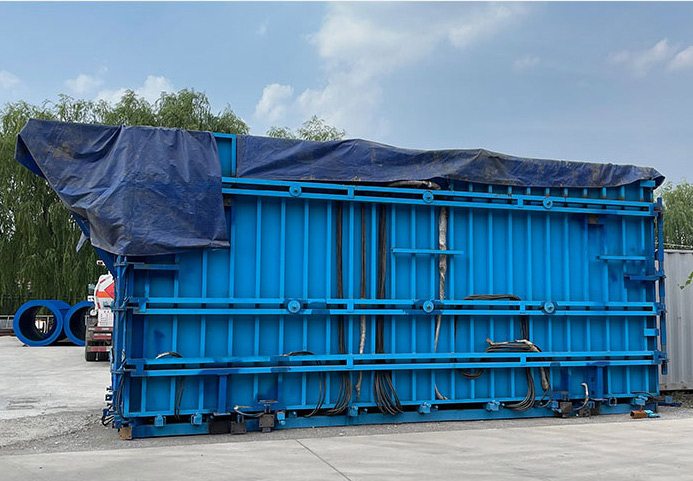
The moulds function through a process of opening and closing to form cavities for rebar cages and concrete. Key steps include:
Concrete Pouring: Concrete is poured into the mould cavity.
Steam Curing: The mould is enclosed with insulation, and steam is introduced to accelerate curing.
Demoulding: Once the concrete reaches the desired strength, the mould is opened, and the precast structure is removed.
This process ensures high precision and strength in the final product, meeting the demands of modern construction.
Applications
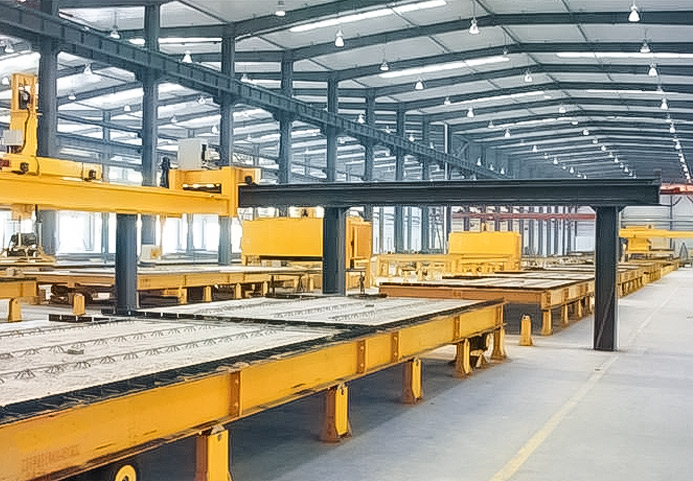
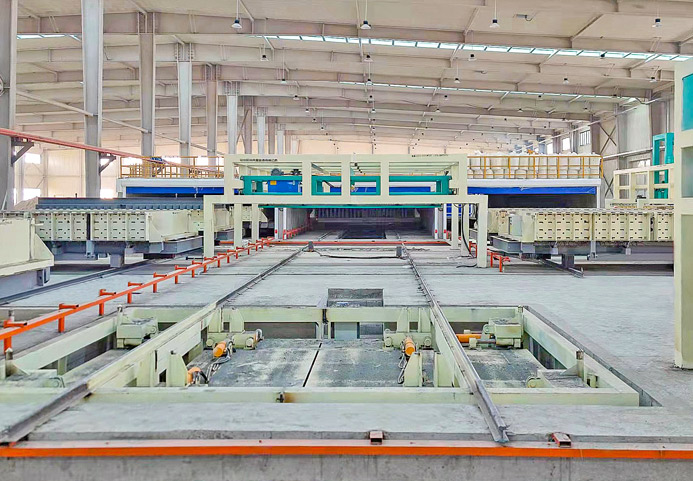
Cement house moulds are widely used in factories to produce prefabricated concrete houses. These are suitable for projects requiring rapid construction timelines and high-quality precast components.
Technical Specifications
Here are the typical parameters of cement house moulds:
Wall thickness: 15–20 cm
Slab thickness: 10–15 cm
External dimensions (length, width, height):
| Width (mm) | Length (mm) | Height (mm) | Mould Weight (Kg) | Rated Power (Kw) |
|---|---|---|---|---|
| 3600 | 7200 | 3000 | 26,000 | 15 |
| 3300 | 6000 | 3000 | 22,500 | 13 |
This flexibility allows for the production of a variety of precast house designs.
Key Advantages
Time-Saving: Factory-based operations reduce on-site labour and time.
Cost-Efficiency: Lower overall construction costs.
Durability: Designed for long-term use with a lifespan of up to 8 years.
Safety Precautions
Due to the heavy nature of cement house moulds, each weighing over 20 tons, and the weight of the final precast structure (approximately 30 tons), it is critical that operators:
Follow operational guidelines strictly;
Ensure all personnel are fully trained in safety protocols;
Use appropriate lifting equipment during all handling procedures.
Cement house moulds have revolutionised the prefabricated construction industry by providing a sustainable and highly efficient solution for modern housing needs. Their ability to accommodate diverse specifications while ensuring consistent, high-quality outputs makes them indispensable in large-scale construction projects.